- Home
- Manual vs AI Digitizing
Manual vs AI Digitizing
Hand-Built vs Auto-Generated
Why Hand-Built Files Sew Cleaner Than Auto-Generated Ones
Every file is built by hand and never auto-traced, with underlay, density, and pull compensation set for your fabric.
Clean stitch-outs, readable small text, and files that run on your machine without stops.
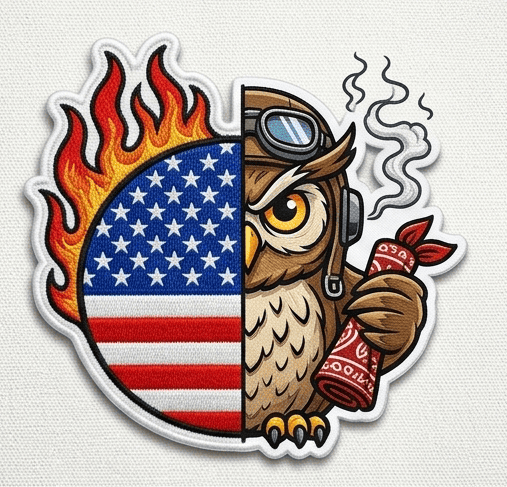
WHY MANUAL WINS
Why Shops Choose Hand-Built Files
Underlay, density, and pull compensation are chosen for your garment, not left at software defaults.
Stitch simulation and a density review on every design, so problems are caught before they reach your machine.
Direct access to your digitizer, with free revisions for 7 days and the editable source file included.
THE DIFFERENCE
Hand-Built vs Auto-Digitized: See It Before You Sew It
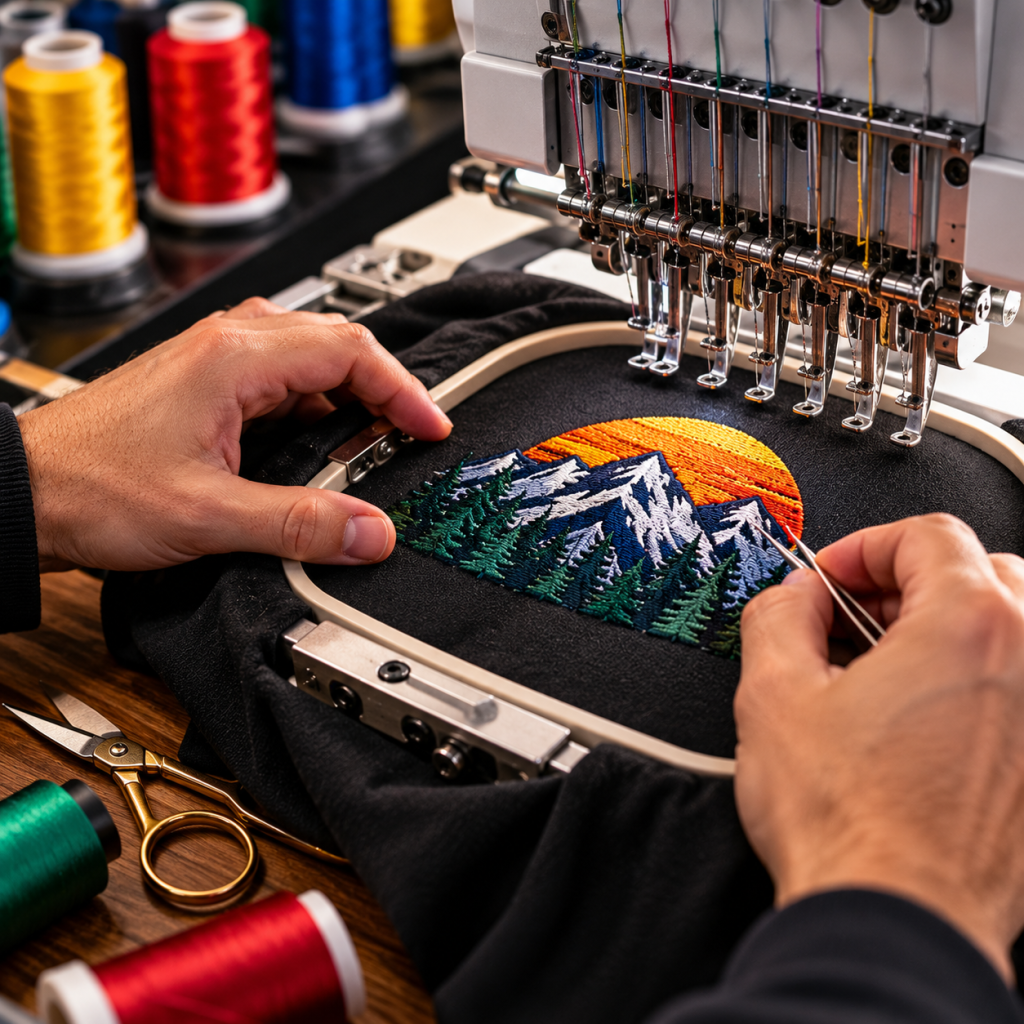
Hand-built (Pixel Digitizing)
- Stitch direction chosen for each part of the design
- Density and underlay set for your fabric and garment
- Pull compensation adjusted to the design
- Small text rebuilt for readability, down to 0.15 inch
- Caps, 3D puff and applique planned technique by technique
- Stitch simulation and density review on every file
- Free revisions for 7 days
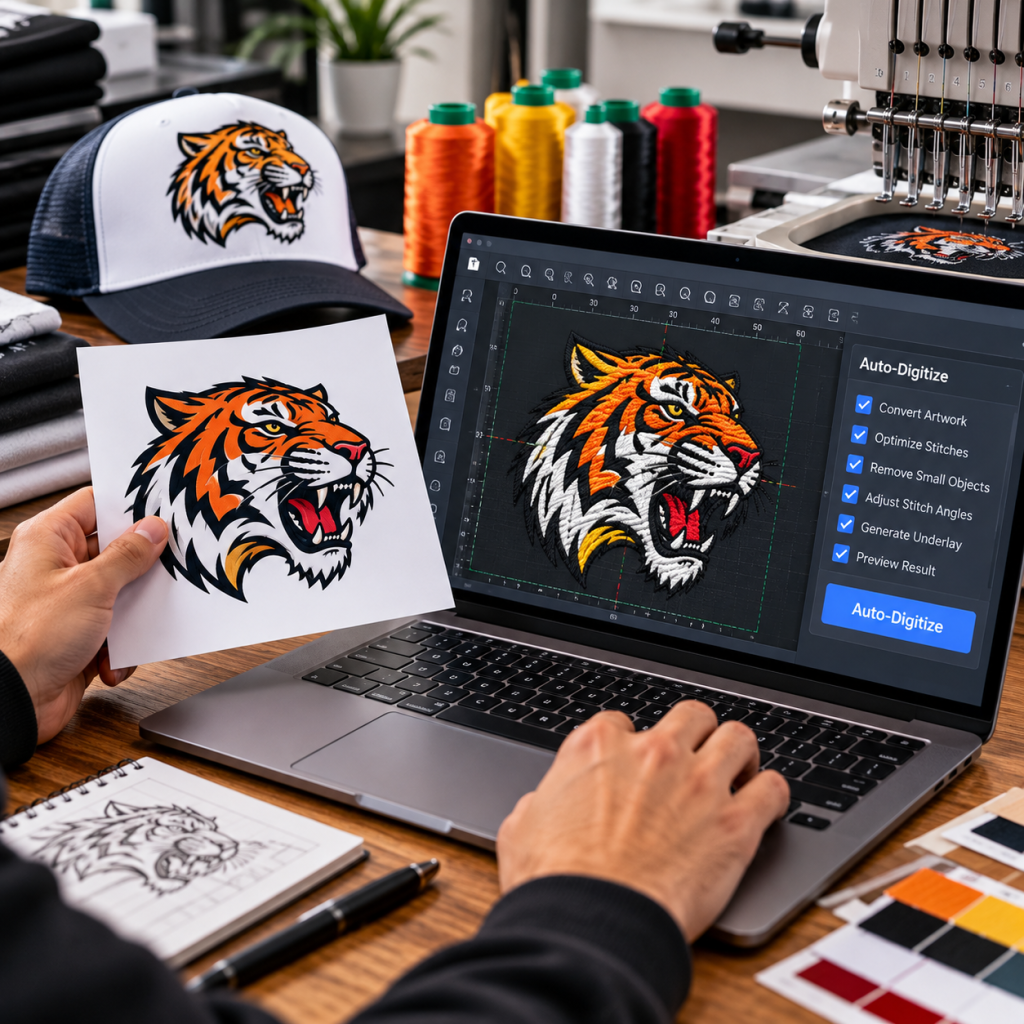
AI or auto-digitized
- Stitch direction guessed by software
- Density and underlay left at defaults
- Pull compensation often missing or generic
- Small text often blurs or breaks
- Caps, 3D puff and applique often stitch poorly
- Usually no quality check before delivery
- Revision policy varies by provider
Questions before you order?
Send Us a Message
Common Questions
Manual vs AI Digitizing FAQs
Manual digitizing means a person builds every stitch path in digitizing software, setting underlay, density, pull compensation, and stitch order for your fabric. AI or auto-digitizing generates stitches from an image automatically, with no human tuning.
Often because of density, underlay, or stitch settings that don’t suit the fabric or the element. Software applies default settings, while a digitizer adjusts them for each part of the design.
For simple, large shapes on stable fabrics, sometimes. For small text, caps, 3D puff, applique, or lightweight and stretch fabrics, we recommend hand digitizing.
Does Pixel Digitizing use auto-digitizing?
It can cost a little more than automated files, but you get a price before we start, with small designs from $7. Fewer failed runs and free revisions often make it cheaper in practice.
Software that turns an image into stitches automatically. It is fast, but it guesses stitch direction, density, and underlay, so logos with small text or fine detail often stitch poorly.